What Kind of File Will Photoshop Allow for a Pattern Upload
Lesson 6: Saving Images
/en/photoshopbasics/basic-tasks-in-photoshop/content/
Introduction
In Photoshop, saving works a fleck differently from most other applications. Instead of working with i main file type—similar .docx in Microsoft Word—Photoshop offers a variety of means to save your images. In this lesson, we'll cover the different saving options in Photoshop, along with some common reasons to salvage files in different formats.
If y'all'd like to follow along, you can download our instance file.
Saving options
When saving a file in Photoshop, yous have several options and file formats to choose from:
- PSD: This is the default file blazon for Photoshop documents, although you won't necessarily use it for every prototype. Information technology will save your layers and all of the other information in your epitome so you can easily re-edit information technology later. PSD files are designed to be opened in Photoshop, and then if you want to share the image with others you'll too need to relieve a copy of the image in a mutual file format, like JPEG.
- Mutual file formats: You can save images in a variety of common file types, including JPEG and PNG. These file formats can exist viewed and edited on nigh whatever computer or mobile device, which makes them well-suited for sharing with others. However, unlike PSD files these formats aren't as useful if yous programme to go on editing the file, and they also can't preserve layer information.
- Save for Spider web: If you're planning to upload an image to the Spider web, like on a blog or website, you'll desire to utilise the Save for Spider web feature. This tool allows you lot to save images that are optimized for the Web, which will make them easier to download and view online. Relieve for Web also includes several helpful features for preparing images for the Spider web, including the selection to resize images.
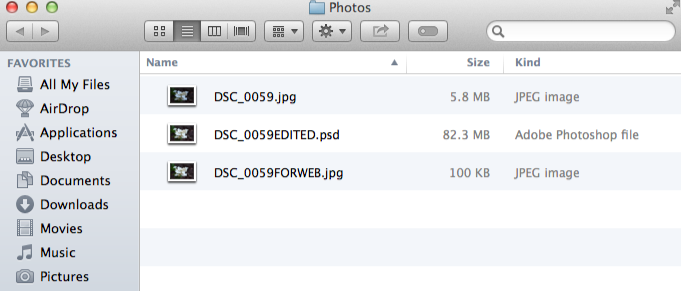
In the image below, you tin can see three different versions of an image file: the original JPEG file, an edited PSD version, and a terminal JPEG version that'due south been resized and saved for the Web. You tin can meet that the Spider web version has a much smaller file size than the original and PSD versions.
Ultimately, the saving option y'all choose will depend on what y'all demand to do with the image. Let's take a look at a couple of scenarios to see why you might choose different saving options.
Scenario ane
Let's say you lot're asked to create a new header prototype for a visitor website. You've been given a photo to include, and you demand to add together some text with the visitor name. Because you'll probable edit and revise this type of project, you'll want to save information technology as a PSD file. This way, you can easily continue editing the file subsequently on. And considering it will somewhen be posted online, y'all'll also want to employ Salve for Web to create a new JPEG version of the finished image.
Scenario 2
Let'due south say you lot're planning to share some photos from a recent vacation with your friends. You lot'd just like to make some quick adjustments in Photoshop, similar cropping and rotating, earlier sharing them. In this instance, you could open the original image files in Photoshop, make the necessary adjustments, then save a new version of the edited photos every bit JPEGs. Considering none of these edits are too complicated, you lot probably don't need to salve a separate PSD version of each prototype.
As you can see, the saving option you choose will vary from project to projection. Before saving an image, take a moment to consider the type of files you'll need. As y'all start to gain more than feel with Photoshop, this process will begin to feel quick and natural.
Using Save As
You lot'll use the Save Every bit control to save files in the PSD format, also as other common formats like JPEG and PNG.
To salvage a file with Save As:
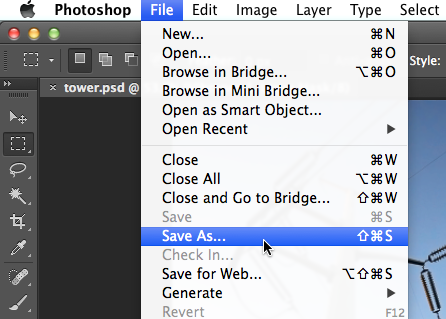
- With the image open in Photoshop, select File > Save As.
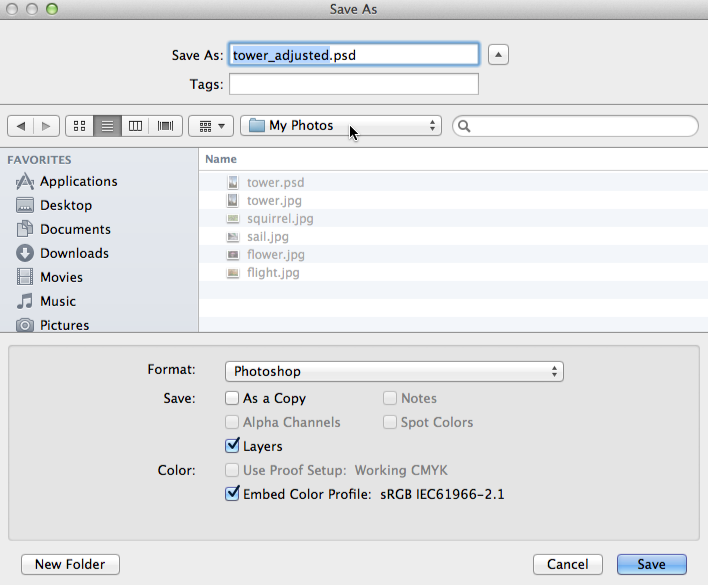
- A dialog box will appear. Type the desired file name, and then choose a location for the file. You'll want to use a new file name to avert accidentally overwriting the original file.
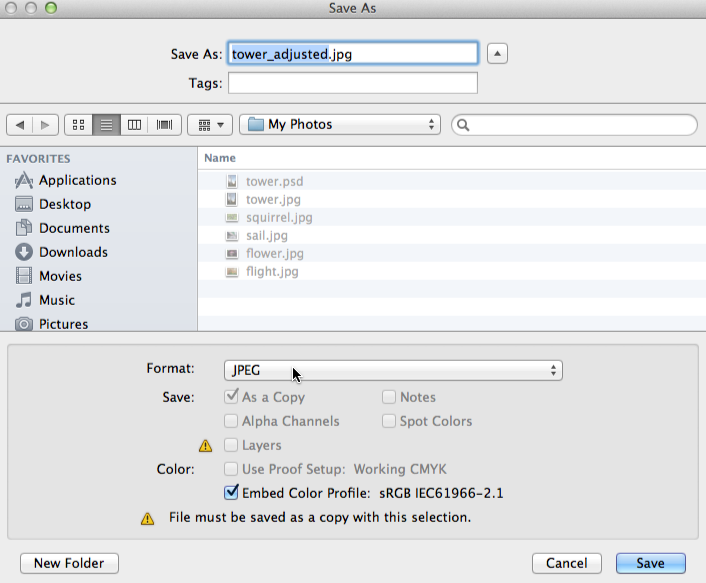
- Click the Format card, so choose the desired file format. In our example, nosotros'll save this image equally a JPEG file. If y'all're saving as a PSD file, make sure the Layers option is checked. However, nearly other formats won't let y'all to select this option.
- Click Salve.
- Some file formats, such as JPEG and TIFF, will give you additional options when saving. Select the desired quality level, then click OK to save the image.
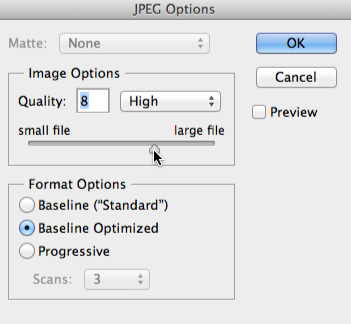
If you've already saved your project equally a PSD file, you can select File >Save or printing Ctrl+Southward (or Command+S on a Mac) to save your progress at any fourth dimension. However, if you lot're working with some other format similar JPEG, nosotros recommend using Save As to avert overwriting your original file.
Endeavor this!
Open up the case file in Photoshop and try saving information technology in unlike file formats, like PSD and JPEG. Notice how the PSD format preserves the individual layers, while the JPEG format does non.
Using Salve for Web
When you lot use the Save for Web feature, you'll demand to make a few decisions about the image you lot're saving:
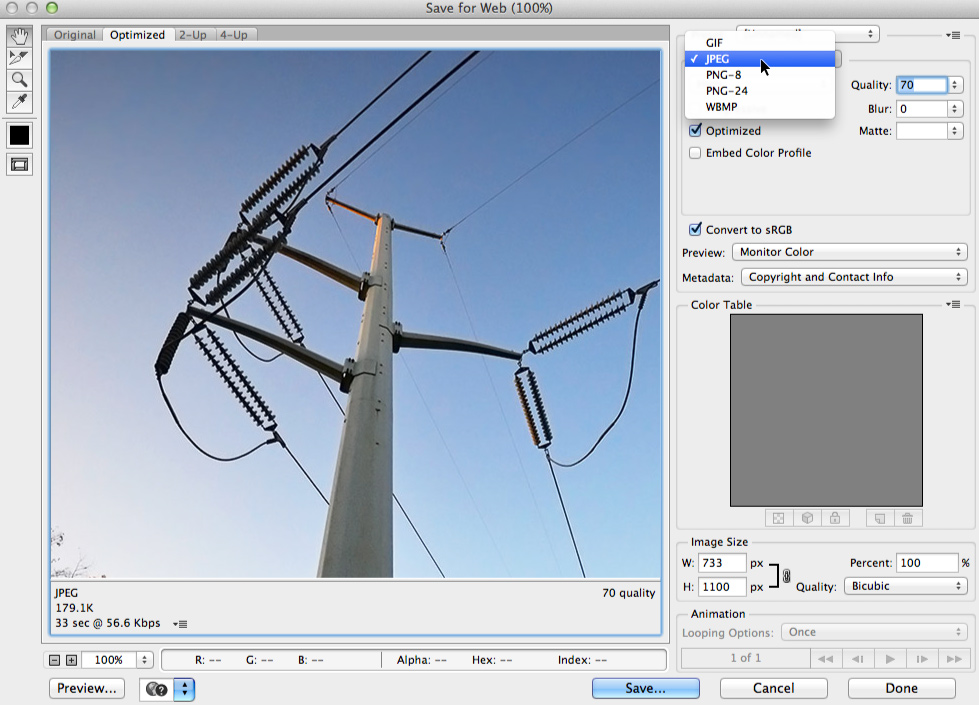
- File format: Save for Web allows you lot to cull from a few Web-condom file formats. Virtually of the fourth dimension, you lot'll use the JPEG format for photographs. PNG-24 will continue the full quality of the epitome, whereas PNG-8 is mainly used for graphics and illustrations that employ simply a few colors. Mostly, yous won't need to employ the GIF or WBMP formats.
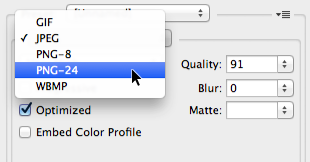
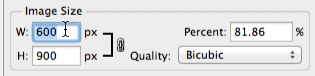
- Image size: You tin resize the epitome directly from the Save for Web dialog box. Resizing the epitome to be smaller will also reduce the file size. However, if you're using a service like Facebook or Tumblr, you probably won't need to resize your images because these services resize them automatically.
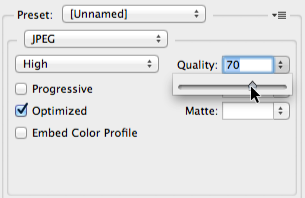
- Quality: If you're using the JPEG format, the image can be saved at unlike quality levels. You may desire to experiment with different settings to detect the best balance between quality and file size.
Try this!
Elevate the slider in the interactive below to suit the JPEG pinch quality. Remember, college quality levels will also increase the file size. Try to find a setting that looks good while keeping the file size relatively small.
For best results, we recommend using the Chrome web browser with these interactives.
To salvage for the Web:
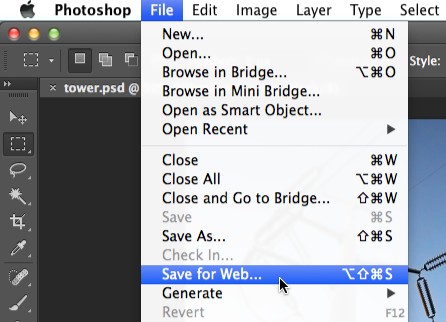
- Select File > Relieve for Web.
- The Salvage for Spider web dialog box will appear. Select the desired file type and quality level.
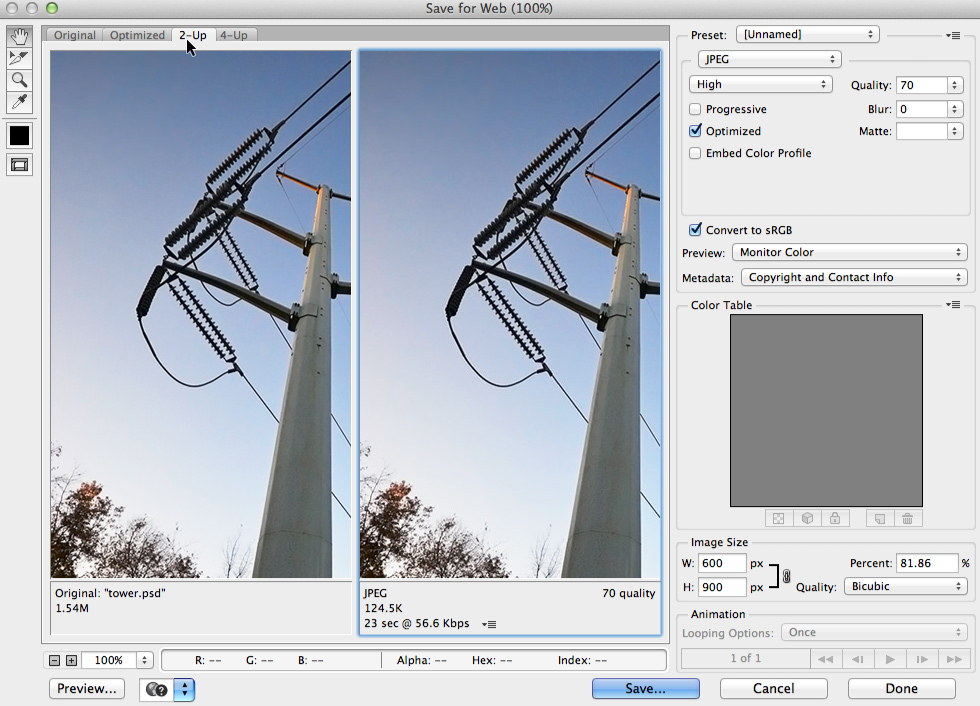
- If needed, resize the paradigm by typing the desired dimensions under Image Size. When you enter the new epitome width, the height should be adjusted automatically to maintain the original aspect ratio.
- If you want, you can use the 2-Up view to compare the original epitome with a preview of the new version. This is an easy fashion to make sure yous haven't lost likewise much quality from the original version. Note the file size in the lesser-left corner of each preview window.
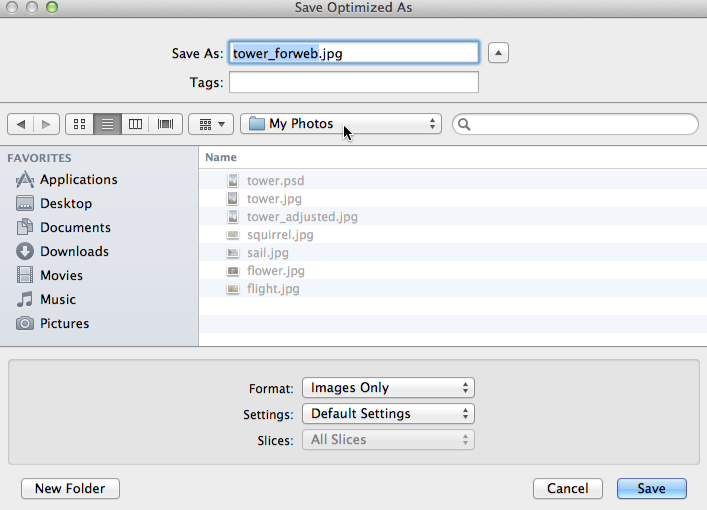
- Click Relieve. A new dialog box volition appear. Type the desired file name and choose a location for the file, and then click Relieve. You'll desire to utilise a new file proper noun to avert accidentally overwriting the original file.
Try this!
Open the example file in Photoshop and use Save for Web to save a new version of the image. Try out different file formats and quality settings to come across how they bear on the prototype's quality and file size.
/en/photoshopbasics/understanding-layers/content/
Source: https://edu.gcfglobal.org/en/photoshopbasics/saving-images/1/

Postar um comentário for "What Kind of File Will Photoshop Allow for a Pattern Upload"